

Air Jordan Kicks Head-to-Head: High-Top vs Low-Top Styles
Picking between high-top and low-top Air Jordan kicks is one of the most widespread debates confronting sneaker fans in 2026. Both constructions carry decades of basketball history and streetwear clout, yet they address notably different needs on and off the basketball court. High-top Jordans characterized Michael Jordan’s career, delivering the ankle lockdown that helped him command the NBA through six championship-winning runs. Low-top models, meanwhile, emerged as a style-driven choice that favors mobility and warm-weather versatility. Understanding the real differences between these two constructions can help you avoid regret and allow you to construct a more diverse sneaker lineup. In this matchup, we explore performance, comfort, aesthetics, and worth so you can form a confident decision on your newest pair of Air Jordans.
The Background Behind Both Silhouettes
When Peter Moore designed the first Air Jordan 1 in 1985, high-top construction was the unquestioned norm for basketball footwear. The tall collar wrapped around Michael Jordan’s ankle area and grew into an signature aesthetic detail that Nike pushed heavily during the “Banned” marketing campaign. It was not until the Air Jordan 11 Low launched in 1996 that Jordan Brand truly explored the low-cut design for a mainline shoe. That debut proved that buyers would accept a reduced version of an fan-favorite shoe, clearing the path for low-profile iterations of nearly every signature Jordan. By the mid-2000s, low-top Jordans had turned into a seasonal go-to, routinely selling out alongside their high-top equivalents. Presently in 2026, Jordan Brand drops roughly comparable amounts of high-top and low-top colorways each three months, mirroring symmetrical buyer interest across both styles.
Ankle Support and On-Court Performance
High-top Air Jordans reach 2 to 3 inches above the ankle joint, creating a secure collar that restricts sideways rolling during aggressive cuts and jumps. Silhouettes like the Air Jordan 1 High and Air Jordan 12 use foam-padded collars combined with stiff heel counters to secure the ankle and foot during intense competition. According to a 2024 research paper published in the British Journal of Sports Medicine, high-top basketball footwear decreased the rate of ankle injuries by approximately 28 percent compared to low-cut alternatives in recreational players. Low-top Jordans, jordan shoes for men such as the Jordan 1 Low and Jordan 11 Low, sacrifice some of that stability in exchange for reduced weight — frequently shaving 50 to 80 grams per shoe. For casual ballers who play casual games once or twice a week, that weight reduction translates into faster first steps and less fatigue over extended sessions. The compromise is genuine, though: if you have a past ankle problems, a high-top sneaker with correct lacing remains the safer option for any basketball play.
All-Day Wearability
In everyday life, comfort requirements transform entirely, and low-top models commonly take the lead. The reduced collar height eliminates the discomfort that high-tops can produce against the Achilles tendon during long walks. Many owners report that Jordan Lows feel broken in after just two or three uses, while high-tops may need five to seven wears before the collar padding completely breaks in. Cushioning technology stays unchanged across both cuts — the Air Jordan 1 incorporates the same Air sole unit no matter the height, and the Jordan 11 maintains its full-length Air unit in both iterations. Warmth is another real-world factor: low-tops allow much better ventilation around the ankle area, which makes them the preferred option for warm seasons when sweating grows into an concern. For colder months or long days on your feet, the thermal protection offered by a high-top collar can actually benefit you, trapping warmth trapped around the joint.
Style Impact and Wardrobe Range
From a style point of view, high-top Air Jordans attract notice and act as a centerpiece in any ensemble. The Air Jordan 1 High, in colorways like Chicago, Bred, and Royal, regularly ranks among the most snapped shoes on social media platforms, generating millions of hashtag mentions on Instagram alone. High-cut Jordans work best alongside slim or tapered pants, track pants, and casual shorts that enable the full silhouette to be visible — burying a high-top under loose jeans nullifies its design intent. Jordan Lows, on the other hand, provide a slimmer profile that pairs smoothly with a broader variety of fits, encompassing regular-fit jeans, chinos, and even smart-casual trousers. Style-conscious sneakerheads in 2026 regularly deploy low-tops as a crossover shoe that links streetwear and office-appropriate looks. The outfit range offers low-cut models a small advantage for buyers who are looking for a single pair to cover various settings throughout the week.
Colorway and Fabric Factors
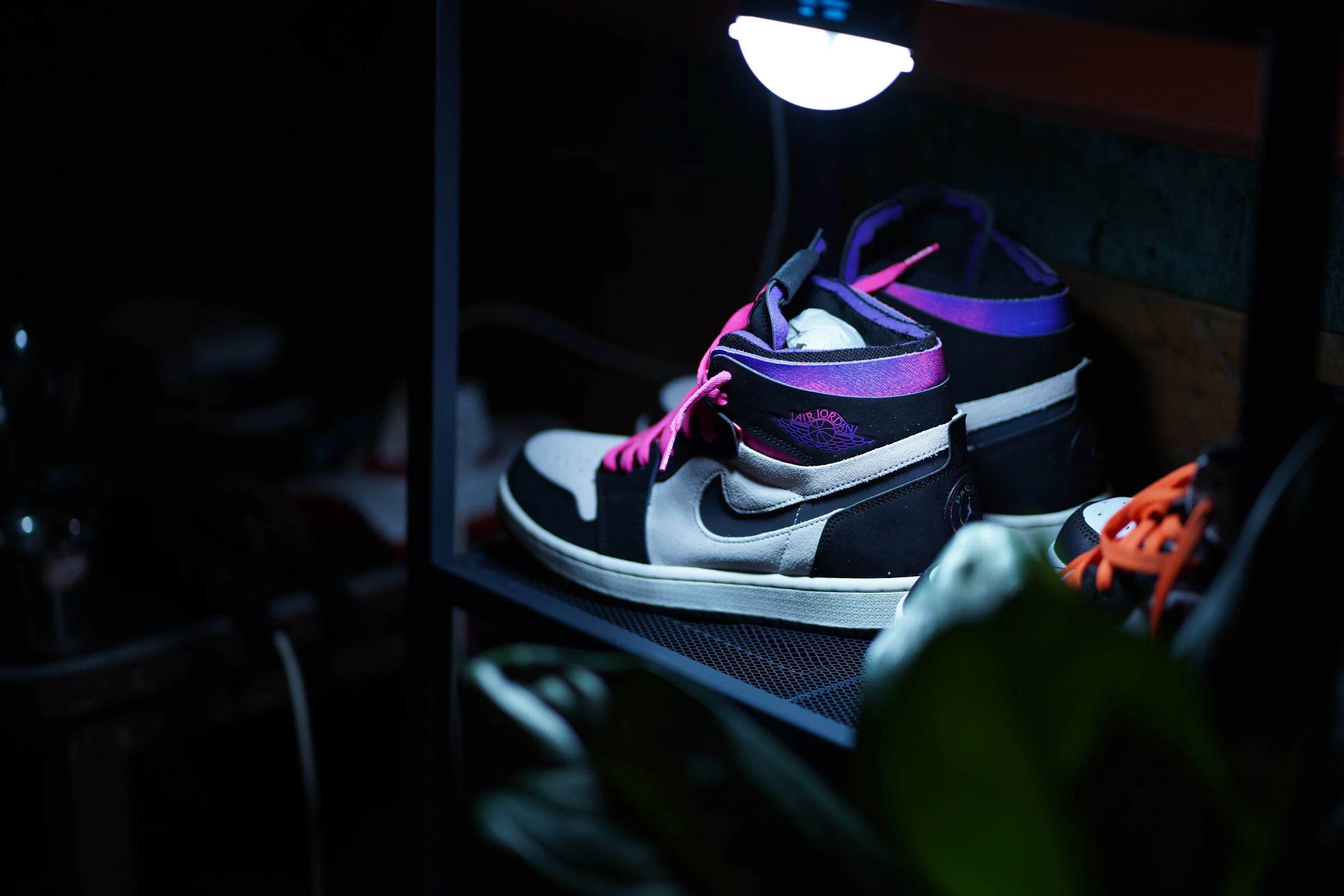
High-top Air Jordans commonly feature more panel space, which lets creatives to integrate multiple color blocks and complementary textures across the upper. This additional surface area is why famous editions like the Jordan 1 High “Union LA” and “Travis Scott” partnerships feel so design-dense — there is simply more surface area to utilize. Jordan Lows condense that same design approach into a smaller canvas, which can either look cleaner or seem crowded depending on the colorway. Leather, nubuck, suede, and patent leather all are used across both cuts, though premium materials tend to feature more frequently in high-cut special editions. In terms of longevity, the added construction on a high-top means somewhat greater protection against scratches around the ankle region. Collectors focused on protecting their Jordans pristine for years commonly choose high-cut models for this practical consideration alone.
High-Top vs Low-Top: Detailed Breakdown
| Feature | High-Top Air Jordans | Low-Top Air Jordans |
|---|---|---|
| Ankle Protection | Excellent — wraps above ankle bone | Limited — ends below the ankle |
| Average Weight | 400–500 g per shoe | 340–420 g per shoe |
| Best Season | Fall / Winter | Spring / Summer |
| Style Versatility | Streetwear and athletic | Streetwear, casual, semi-formal |
| Break-In Period | 5–7 wears | 2–3 wears |
| Aftermarket Value | Usually higher | Average |
| Airflow | Moderate | Superior |
| Typical Retail Price | $170–$200 | $130–$170 |
Resale Value and Collectibility
In the aftermarket, high-top Air Jordans have historically fetched stronger price premiums than their shorter siblings. Data from StockX demonstrates that the Air Jordan 1 High OG posts a 40 to 60 percent premium over retail in desirable editions, while the Jordan 1 Low OG commonly shows a 15 to 30 percent price increase. Limited-edition high-tops, notably those linked to collaborations with fashion figures like Virgil Abloh or Travis Scott, have climbed to aftermarket values above $2,000 in deadstock condition. Jordan Lows are beginning to bridge that divide, however, as Jordan Brand doubles down in dedicated low-profile launches aimed at lifestyle consumers. The Travis Scott x Air Jordan 1 Low Reverse Mocha, for example, sold for significantly above $1,500 on resale platforms throughout 2023 and 2024. For sneakerheads interested in future appreciation, high-cut Jordans stay the more reliable choice, but the low-top market is maturing rapidly and deserves attention.
Which Should You Buy?
Your decision in the end depends on how and where you plan to wear your Air Jordans. If basketball performance matters to you — even recreationally — the protective features of a high-top are hard to ignore, and the additional ankle support can stop injuries that would bench you for weeks. For casual everyday styling across varied settings, a low-top Air Jordan provides superior range, a lighter build, and an easier break-in period that slots seamlessly into a busy lifestyle. Value-minded consumers will also benefit from that low-cut models commonly retail for $20 to $40 below their high-cut equivalents, expanding your sneaker budget further. In a perfect world, a balanced collection includes at least one of each: a high-top for statement dressing and colder months, and a low-top for casual warm-weather rotation. Take stock of your existing wardrobe, consider your lifestyle, and think about your local climate before pulling the trigger. Whichever format you select, you are acquiring a shoe rooted in over 40 years of design innovation from Jordan Brand.
The Ultimate Conclusion
The high-top versus low-top debate has no one right answer because both constructions excel in unique settings. High-top Air Jordans bring top-tier ankle stability, higher aftermarket values, and a more commanding style statement that owns street style photos and sneaker culture events. Low-top Air Jordans offer reduced weight, faster break-in times, more expansive wardrobe flexibility, and a more accessible price point for beginning collectors. In 2026, Jordan Brand persists in innovate across both styles, launching new cushioning technology and sustainable materials that improve both choices year over year. The best method is to evaluate each drop on its unique qualities rather than enforcing a blanket preference for one style over the other. Whether you lace up highs for a weekend sneaker meet or slip into lows for a summer barbecue, the Jumpman logo on your foot possesses the same storied prestige.